Radio New Zealand Interviewed Me About Quiet Quitting Your Marriage. Here's What I Said.

When your content about "Quiet Quitting Marriage" travels from the United States to New Zealand, something is resonating.

A few weeks ago a clip of my content was featured on The Oprah Podcast episode about quiet quitting your marriage. What happened next caught me completely by surprise - Radio New Zealand reached out.
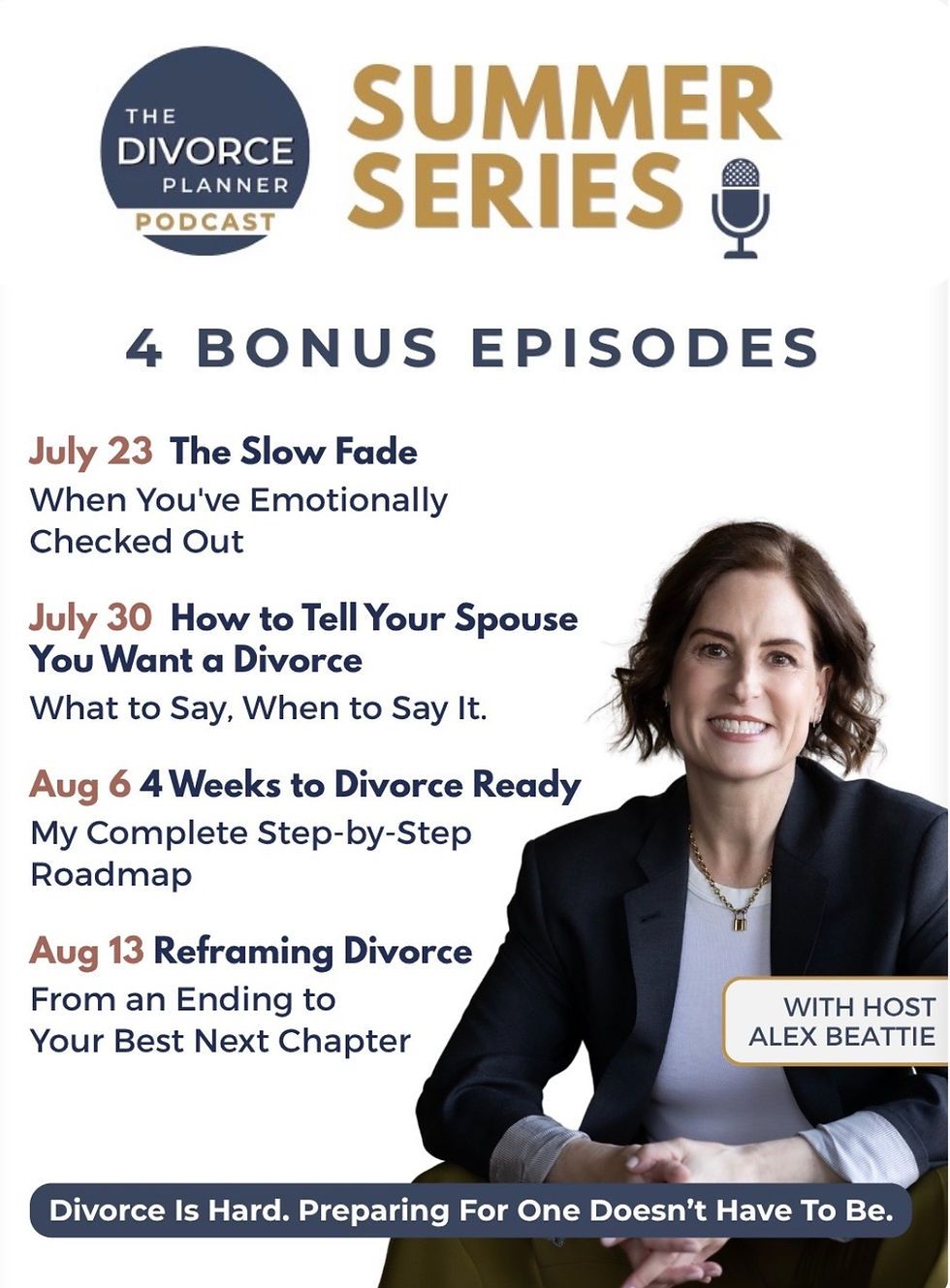
Their producers had seenthe Oprah Podcast feature, read my post Quiet Quitting Your Marriage Isn't a Solution — It's a Signal, and listened to my podcast episode The Slow Fade: What's Really Happening When You've Emotionally Checked Out of Your Marriage. They wanted to talk.
On September 9th, I joined the RNZ Afternoons program to discuss quiet quitting your marriage — what it actually means, why it's happening, and what to do if you recognize yourself in it.
Subscribe to The Divorce Planner newsletter and get divorce prep tips and tools delivered right to your inbox!
Where the Term Comes From
"Quiet quitting" started as a workplace trend on social media. It described employees who stopped going above and beyond at work and started doing just enough to avoid getting fired. No more extra effort. No more staying late. Just the bare minimum to keep the paycheck coming.
The term migrated into conversations about marriage almost organically — because the pattern is the same.
You stop going above and beyond in the relationship. You stop bringing your full self. You stop investing in the connection, the intimacy, the future. You do just enough to keep the household running. The conversations disappear. The intimacy goes. And what's left looks less like a marriage and more like a business partnership for managing a shared life.
That's quiet quitting your marriage.
Why This Is Happening
The reason this term has resonated so widely — in the United States, in New Zealand, apparently everywhere — is that it names something people have been experiencing but didn't have language for.
You're not unhappy enough to leave. But you're not happy enough to stay fully present. So you find a middle ground that isn't really a ground at all. It's a limbo.
And limbo is not a neutral place. It has costs; to your mental health, to your kids who are watching more than you realize, to your sense of self, to any possibility of genuine connection whether in this relationship or a future one.
What I told RNZ is the same thing I've been saying for years: quiet quitting your marriage is a signal. It's your nervous system telling you something important about the state of your relationship and the state of yourself.
The question then becomes: What you're going to do with that signal?
What the Signal Is Telling You
In my experience working with clients who are in this phase, quiet quitting usually means one of three things:
The relationship has run its course (and you know it). You've been checked out for a long time. The connection is gone and no amount of effort is going to bring it back. The quiet quitting is your instinct telling you what your conscious mind hasn't fully accepted yet.
The relationship is in serious trouble but isn't over. There's something worth saving, but it would require real work — couples therapy, honest conversations, a fundamental shift in how you're both showing up. The quiet quitting is a last warning before the door closes.
You're burned out and need something to change. You haven't checked out of the relationship — you've checked out of the unsustainable version of your life. You need support, relief, a different dynamic. The quiet quitting is a signal about what you need, not necessarily about whether the marriage can continue.
These are very different situations. They require very different responses. The most important thing you can do is figure out which one you're actually in — honestly, without the filter of what you're supposed to feel or what would be easier to believe.
The Slow Fade: What Happens Beneath the Surface
Quiet quitting doesn't happen overnight. It's the result of what I call the slow fade, the gradual emotional withdrawal that happens when needs go unmet for long enough that a person stops expecting them to be met at all.
You reached out for connection and didn't get it. You tried to have the conversation and it went nowhere. You asked for something and were told you were asking for too much. So you stopped reaching. Not dramatically. Just quietly.
And at some point, the idea of reconnecting started to feel more exhausting than the disconnection itself.
This is the slow fade. And it's happening in marriages everywhere — not because people stopped caring, but because they cared for so long and tried for so long that they ran out of the emotional resources to keep going.

Listen to the full episode on The Slow Fade here: The Slow Fade: What's Really Happening When You've Emotionally Checked Out of Your Marriage
What to Do If This Is You
Whether you're considering divorce or trying to decide if this marriage can be saved, the limbo has to end. Here's where to start:
Get honest about where you actually are. Not where you tell people you are. Not where you wish you were. Where you actually are. Are you staying because you want to try to rebuild — or because leaving feels too hard? Those require very different responses.
Give the signal the response it deserves. Couples therapy if there's something worth saving. Honest conversation with your spouse about the state of things. Or divorce preparation if you've known for a long time that the marriage is over. Any of these is better than continuing to do nothing and hoping the limbo resolves itself.
Don't navigate this alone. This is too important and too complex to figure out by yourself. A therapist for the emotional work. A divorce coach if you're moving toward leaving. The right support makes all the difference.
Book a free 15-minute consultation with me and we'll talk through where you are and what your next steps look like.
A Note on What This Means
I started The Divorce Planner because I went through my own divorce and couldn't find the kind of practical, strategic, emotionally honest support I needed. I built the frameworks and tools I wished had existed.
The fact that those frameworks are now resonating in New Zealand, on Oprah's platform, in conversations happening around the world — that's not something I take lightly. It tells me that this experience is universal.
If you're in the middle of any of this, you are not alone. And there are steps you can take right now.
Keep Reading and Listening:
Ready to Take Your Next Step?

Sign up for my free 4-email divorce prep series. I'll walk you through exactly what to do emotionally, financially, administratively, and practically—so you can move forward with confidence and clarity.
Not sure where to start? Book a free 15-minute consultation and we'll talk through where you are and what makes sense for your situation.
About Me | ALEX BEATTIE
Divorce Preparation Coach & Author
Alex Beattie is the founder of The Divorce Planner, host of The Divorce Planner Podcast, and author of the upcoming The Divorce Planner: 8 Weeks to Get Organized, Find Clarity, and Become Your Own Best Advocate (Jossey-Bass/Wiley, 2027). Learn more here.